
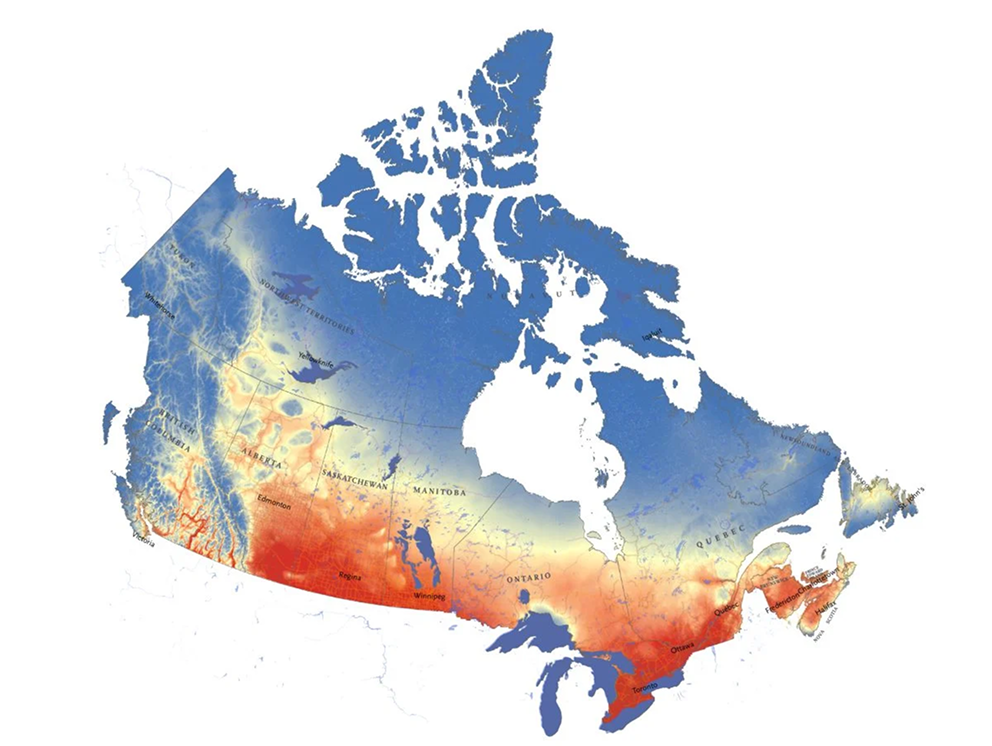
Central Canada, including Ontario and Quebec, sits between these two extremes. The Great Lakes have a partial moderating effect, especially in areas close to the water. They can reduce temperature extremes but also increase humidity and snowfall. Winter cold in these regions often feels sharper due to damp air, while summer heat can feel oppressive because of high moisture levels. Lake-effect weather patterns create localized climate conditions that vary even within short distances.
Advertising
Northern Canada presents another distinct experience. Here, climate is shaped by latitude and limited sunlight rather than proximity to water. Winters are long, dark, and extremely cold, but the air is usually very dry. This dryness can make low temperatures feel less biting than in humid southern regions, despite the numbers being much lower. Summers are short but can feel surprisingly warm due to continuous daylight and direct sunlight.
Wind is another factor that strongly affects perception. Open landscapes, such as the Prairies and Arctic regions, allow wind to move freely, increasing heat loss from the body in winter and reducing comfort even at moderate temperatures. In sheltered urban areas or forested regions, the same temperature can feel significantly different.
Human adaptation also shapes how climate is experienced. Building design, heating systems, clothing habits, and daily routines vary across regions. What feels harsh to someone from the coast may feel normal to someone raised inland. Over time, people adjust expectations and behavior to local conditions, which influences how weather is perceived emotionally and physically.
In short, Canada’s climate feels different across regions because climate is not just about averages. It is a combination of geography, moisture, wind, sunlight, and human adaptation. Understanding these factors explains why a single temperature value cannot describe how the weather actually feels across the country.