
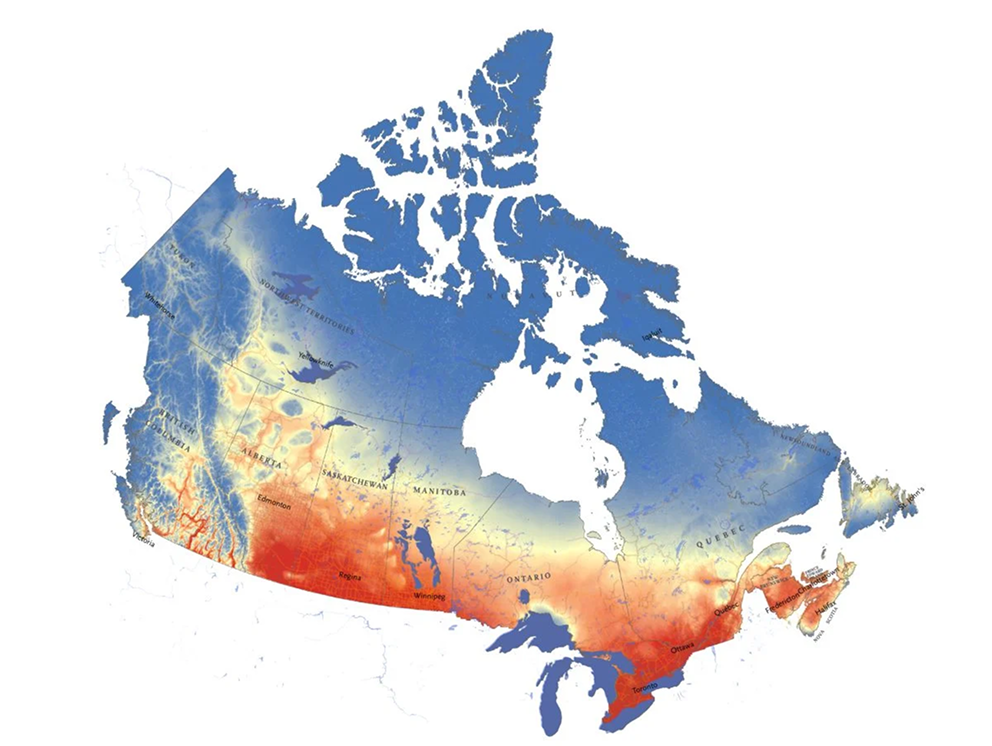
Canada is often described as a cold country, but this simplified view does not reflect everyday reality. In practice, the climate feels very different depending on where you live. The contrast between coastal cities, the Prairies, central regions, and the North is not only about temperature on a map. It is about humidity, wind, sunlight, geography, and how people experience weather in daily life.
Advertising
One of the main reasons for these differences is Canada’s sheer size. The country stretches across multiple latitudes and time zones, which means it receives very uneven amounts of sunlight and solar energy. Southern regions experience longer and warmer summers, while northern areas face extreme seasonal contrasts, with long dark winters and very short but intense summers.
Geography plays a critical role. Coastal regions such as British Columbia are strongly influenced by the Pacific Ocean. Large bodies of water warm and cool slowly, which moderates temperatures throughout the year. As a result, winters on the west coast are relatively mild compared to the rest of Canada, and summers are cooler. However, high humidity and frequent precipitation can make the weather feel heavier and less predictable.
In contrast, the Prairie provinces experience a continental climate. With no nearby oceans to regulate temperature, weather changes can be abrupt and extreme. Winters are cold and dry, often accompanied by strong winds that intensify the sensation of cold. Summers can be very hot, especially during heat waves, but the dry air makes high temperatures feel different than in humid regions. Rapid shifts in weather are common, sometimes within the same day.