
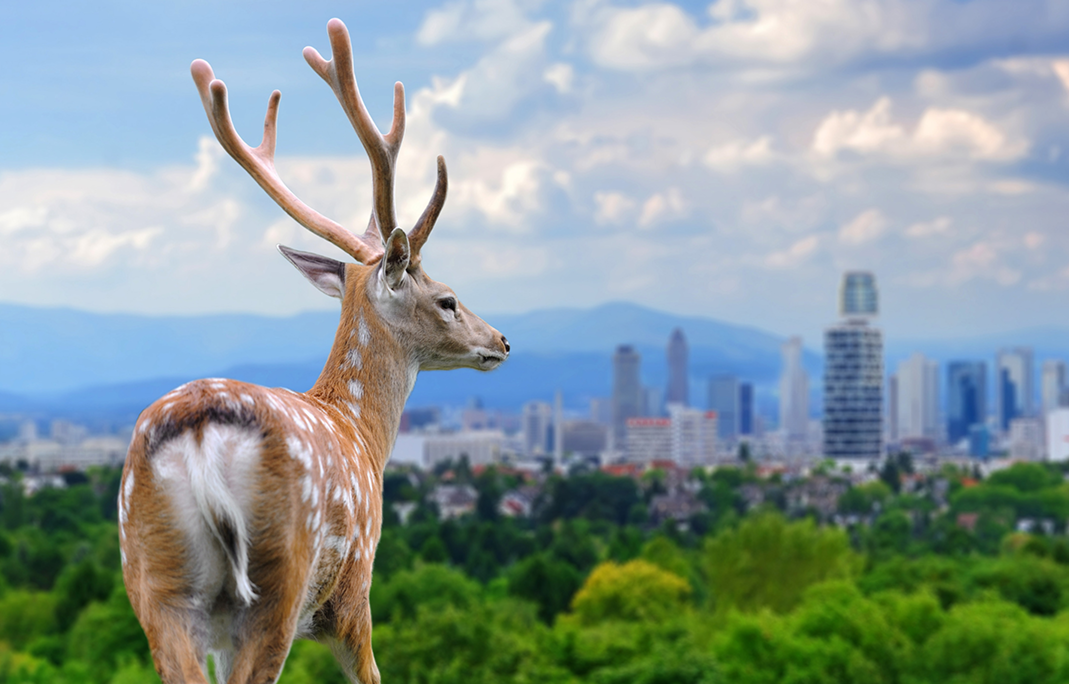
In Canada, wildlife is often imagined as something distant, located deep in forests or far north of urban centers. In reality, many wild animals live surprisingly close to cities and even within them. Urban expansion, green corridors, and changing animal behavior have created environments where wildlife and people share the same space more often than most residents realize.
Advertising
Large mammals are the most visible examples. Deer are common near suburban areas, especially where residential neighborhoods border parks, ravines, or agricultural land. They adapt well to human presence, feeding on gardens, lawns, and ornamental plants. In some regions, moose may occasionally appear on the outskirts of towns, particularly near wetlands or river systems, though they usually avoid dense urban cores.
Predators also live closer than expected. Coyotes are one of the most successful urban adapters in Canada. They use rail lines, riverbanks, and green spaces as movement corridors, often traveling through cities at night. While they are cautious around humans, they are highly intelligent and capable of exploiting urban food sources. Encounters are rare but increasing as cities expand into former habitats.