
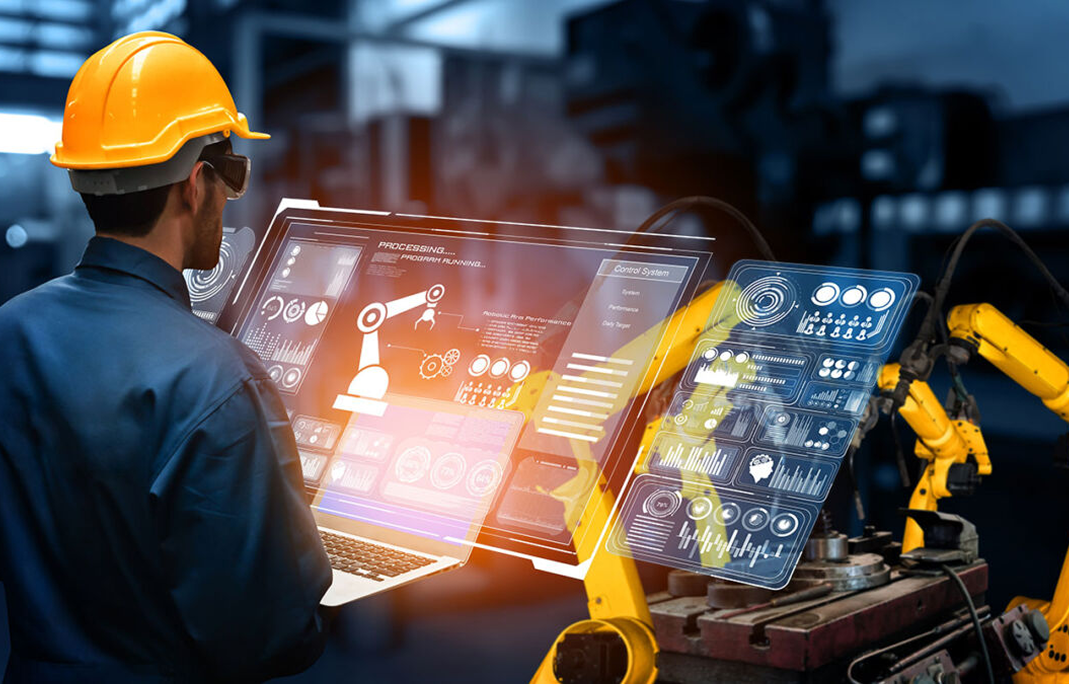
Automation is fundamentally transforming the Canadian labor market, reshaping traditional professions and redefining the skills, workflows, and roles of workers across multiple sectors. From manufacturing and logistics to healthcare, education, and professional services, technological innovation is driving both opportunities and challenges, influencing productivity, employment patterns, and workplace organization. Understanding the impact of automation requires examining how different professions are affected, which skills are becoming essential, and how workers and organizations adapt to this new landscape.
Advertising
In manufacturing and industrial sectors, automation has had one of the most visible impacts. Robotics, computer-controlled machinery, and advanced production lines have replaced many repetitive, manual tasks traditionally performed by assembly line workers. In Canadian automotive plants, food processing facilities, and electronics manufacturing, robots now handle tasks such as welding, packaging, and quality inspection. While this increases precision, output, and safety, it reduces demand for certain low- to mid-skill roles, shifting employment toward positions requiring technical oversight, programming, and maintenance of automated systems. Consequently, workers must acquire skills in robotics operation, computer-aided manufacturing, and data analysis to remain competitive.
The logistics and transportation sector is also being transformed by automation. Warehouses increasingly rely on automated sorting systems, autonomous forklifts, and AI-driven inventory management platforms to optimize efficiency. Canadian e-commerce companies use algorithms to predict demand, streamline delivery routes, and minimize errors, reducing reliance on traditional labor for routine tasks. Similarly, commercial transportation is beginning to explore autonomous trucks and driver-assist technologies, particularly for long-haul freight. These developments shift professional responsibilities from manual operation toward system monitoring, data interpretation, and problem-solving in dynamic logistical environments.
Professional services, including finance, accounting, and law, are being reshaped by automation in subtler ways. Accounting and auditing tasks that were once manual—such as data entry, transaction reconciliation, and report generation—are increasingly performed by software capable of processing large datasets rapidly and accurately. Legal research and contract analysis are aided by AI platforms that scan documents, identify precedents, and flag risks. In these fields, human professionals retain critical judgment, ethical decision-making, and client interaction roles, while technology handles repetitive or computationally intensive tasks. The effect is a shift in skill requirements toward technological literacy, analytical reasoning, and advisory capabilities.
Healthcare is another area where automation is changing traditional roles. In Canadian hospitals and clinics, automated systems support diagnostics, patient monitoring, and administrative functions. AI-assisted imaging analysis helps radiologists detect anomalies faster, electronic health records streamline documentation, and robotic-assisted surgical systems enhance precision. Nurses and technicians increasingly interact with these automated tools, requiring proficiency in operating, interpreting, and integrating technology into patient care. While automation does not replace the core responsibilities of healthcare professionals, it changes workflows, enhances efficiency, and allows medical staff to focus on decision-making, patient engagement, and complex interventions.
Education and research professions are similarly evolving. Automated grading systems, adaptive learning platforms, and AI-driven tutoring tools augment traditional teaching, enabling educators to personalize instruction and identify students’ learning gaps more effectively. Researchers leverage data analysis algorithms, machine learning models, and simulation software to process large datasets and generate insights that would be impossible manually. These technologies enhance productivity but also demand that professionals develop digital literacy, analytical reasoning, and the ability to integrate automated outputs into judgment-based processes.